
Your property works hard every day. Over time, exposure to sun, wind, rain, hail, and fluctuating temperatures naturally takes its toll. However, not every issue you notice after a storm means severe storm damage occurred. In some cases, what looks alarming may simply be normal aging. Understanding the difference between storm damage and wear and tear matters more than most property owners realize. When you know what to look for, you protect both your structure and your investment.
What Normal Wear and Tear Looks Like
First, let’s talk about what aging actually looks like. Every roofing and exterior system experiences gradual wear. Materials expand during hot weather and contract when temperatures drop. For example, asphalt shingles may begin to show minor cracking or slight curling at the edges as they age. You might also notice subtle color fading across large sections of the roof. On metal systems, light surface oxidation can appear after years of exposure. Normal wear and tear appears evenly distributed. It does not suddenly show up in one concentrated area overnight. Instead, it progresses steadily over time.
How Storm Damage Stands Out
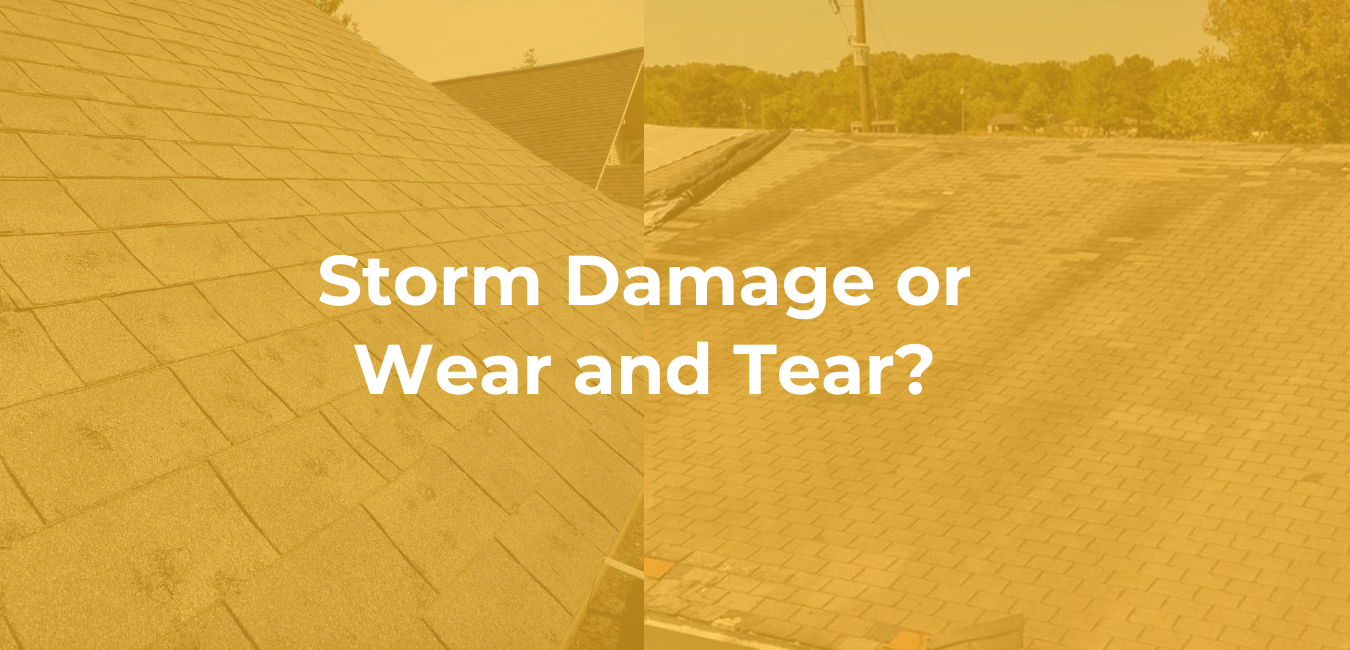
In contrast, storm damage happens suddenly. A single weather event can leave noticeable and often dramatic evidence behind. That difference in timing creates one of the biggest clues. After a hailstorm, for instance, you may find impact marks that look random and scattered. Hail can bruise shingles, crack tiles, and dent metal panels. Unlike natural aging, hail damage does not appear uniform. Instead, it often affects certain slopes or elevations more than others. Wind damage presents differently but remains just as distinct. Strong gusts can lift shingles, crease them, or tear them off completely. Additionally, flying debris can puncture roofing materials or dent gutters and siding.
Severity Makes a Difference
Another important factor involves structural risk. Normal wear rarely causes immediate failure. While aging materials eventually require replacement, they typically show warning signs before major problems develop. Storm damage, on the other hand, can create instant vulnerabilities. Even a small puncture or lifted shingle allows water to enter the roofing system. Once moisture penetrates the surface, it can saturate insulation, weaken decking, stain ceilings, and disrupt operations inside the property. Over time, that secondary damage becomes far more expensive than the original issue.
Timing Is Everything
Finally, consider the timeline. Did you notice the issue immediately after a documented storm? Or has it developed gradually over several seasons? When you track changes consistently, identifying sudden damage becomes much easier. Because weather events can strike unexpectedly, proactive inspections remain one of the most effective ways to protect both residential and commercial properties.
Protecting Your Property Moving Forward
At the end of the day, your property represents a major investment. While normal aging remains inevitable, storm damage requires prompt action. A professional evaluation provides clarity and confidence. The team at Aspen Contracting understands how to identify true storm damage or wear and tear. We guide property owners through the process with honesty, transparency, and higher standards.
If you suspect storm damage or simply want peace of mind about your property’s condition, contact Aspen Contracting today at 877-784-ROOF or visit roofsbyaspen.com to schedule your property evaluation. Protect your investment before small concerns become major problems.
0 Comments